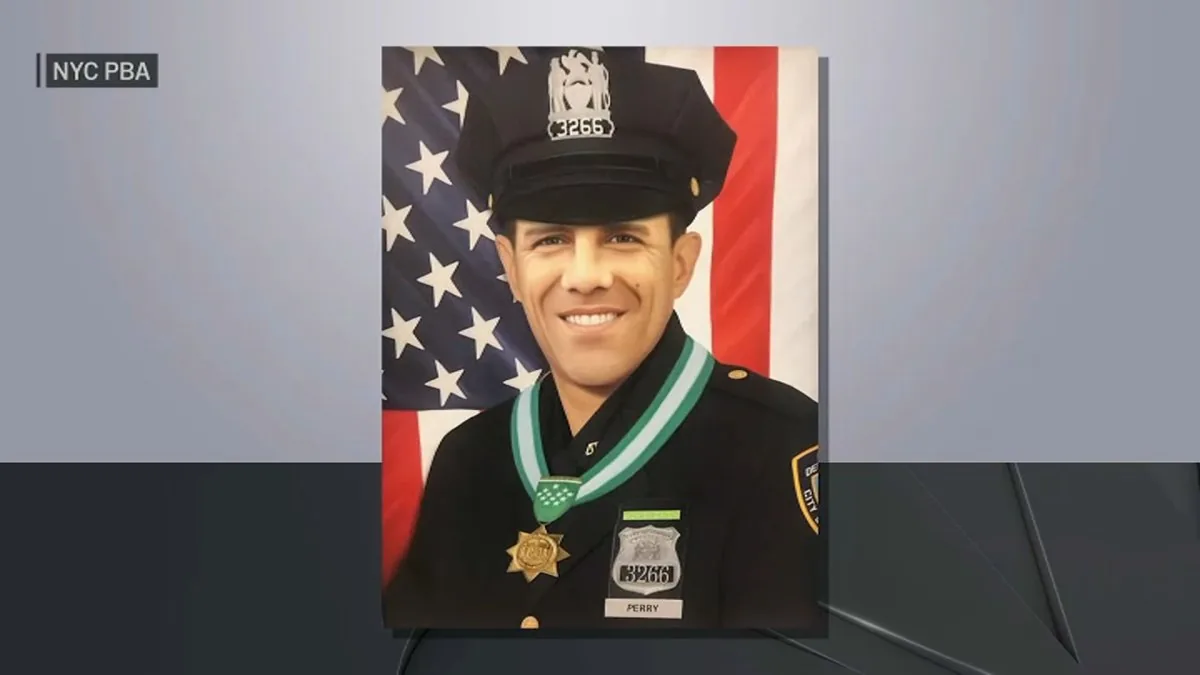



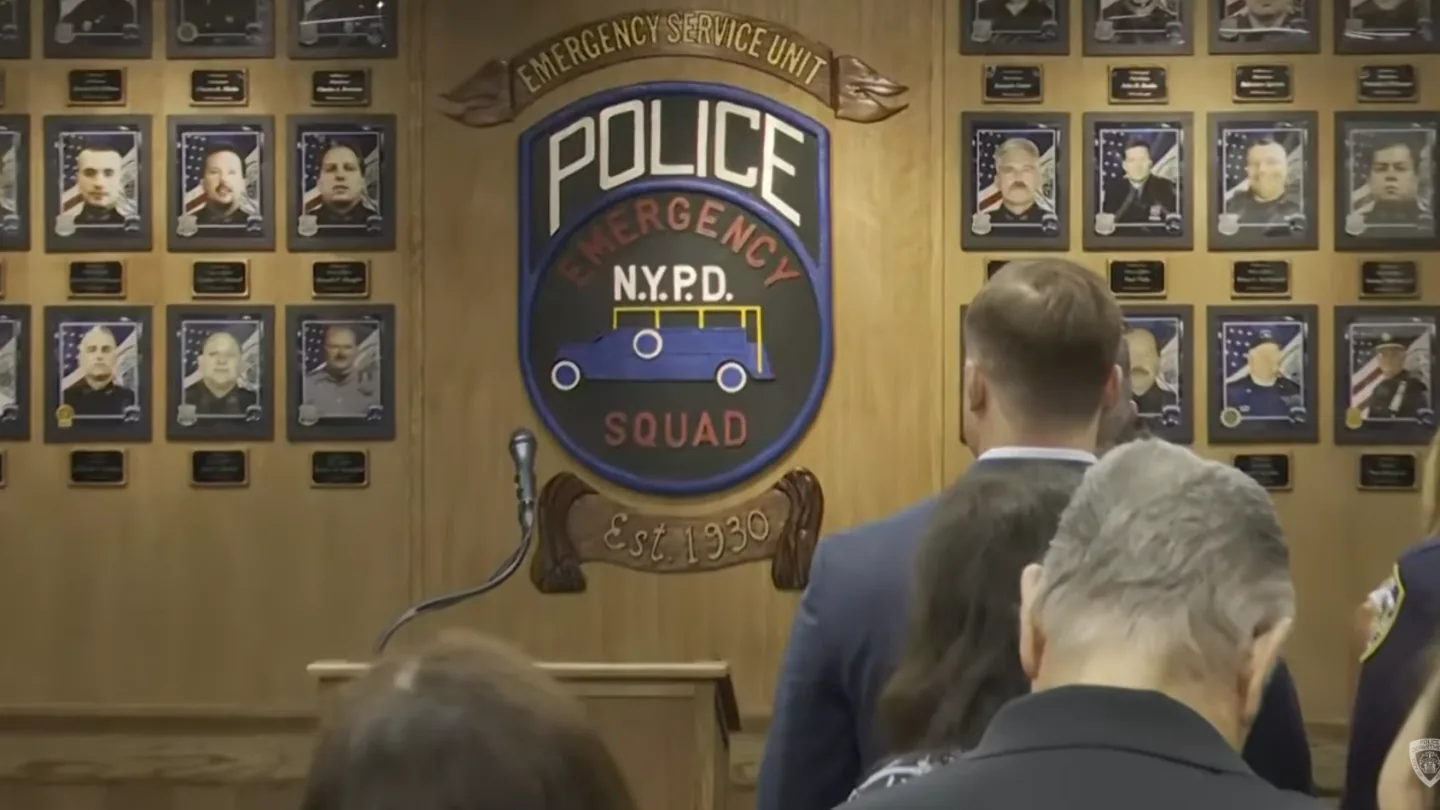
BROOKLYN, NY — The NYPD rededicated its Emergency Service Unit Memorial Wall on Tuesday in a ceremony that recognized 45 members who died in the line of duty or from illnesses tied to the aftermath of Sept. 11. Police Commissioner Jessica Tisch led the event and described the unit as “the most elite team in law enforcement.”
The memorial service brought together top department leaders, families, friends and supporters at Floyd Bennett Field. Officials said the wall honors officers from the unit’s earliest years as well as those lost during and after the World Trade Center attacks, when ESU personnel were among the first responders working at Ground Zero.
Wall honors officers from the unit’s earliest decades and the Sept. 11 response
The memorial recognizes 15 officers killed during the Emergency Service Unit’s first 70 years of operations, along with 14 members who died in the Sept. 11 attacks. Tisch said members from seven emergency service squads across four boroughs were killed that day.
She also said many other first responders later died from illnesses linked to toxic exposure at Ground Zero, and those ESU members were remembered at the ceremony as well. The rededication came as the 25th anniversary of the attacks approaches, adding to the sense of reflection around the event.
Those losses gave the gathering a broader focus than a single date or incident. The wall stands as a permanent reminder of officers whose names, according to NYPD leaders, represent years of rescue work, danger and sacrifice for New York City.
Tisch says ESU was on the front line after the attacks
Tisch told the crowd that the scale of the Sept. 11 response was overwhelming and left little time for anyone to absorb the losses. She said the biggest crime scene in city history quickly became the largest rescue and recovery operation ever undertaken, with ESU working on the front line.
She said those assignments included searching for the bodies of friends and colleagues while searchers were still grieving. Tisch also noted that more than half of the 23 NYPD officers killed at the World Trade Center were members of the Emergency Service Unit.
In her remarks, she called ESU “the tip of the NYPD’s spear” when New York City was attacked. Her comments tied the memorial not only to sacrifice, but also to the dangerous and emotionally wrenching work that followed the collapse of the towers.
Department leaders attend the ceremony at Floyd Bennett Field
The dais included Chief of Housing Charles McEvoy, Chief of Special Operations Wilson Aramboles, Chief of Department Michael LiPetri and ESU Commanding Officer Gerard Dowling. Their presence underscored the event’s role as a departmentwide tribute rather than a narrow unit ceremony.
The memorial honoring fallen officers is located at Floyd Bennett Field in Brooklyn, the same place where Tuesday’s rededication took place. The setting provided a symbolic backdrop for a service centered on duty, remembrance and the department’s long history of emergency response.
While the event focused on loss, it also reflected the NYPD’s effort to formally recognize the role ESU has played across generations. The unit operates as part of the department’s Special Operations Division and handles a wide range of emergencies.
Emergency Service Unit handles fires, tactical work and rescue missions
ESU responds to emergencies throughout the NYPD, including fire incidents, tactical security operations and EMT work. The unit also assists the Port Authority, giving it responsibilities that reach beyond a single kind of call or scene.
That broad mission helped explain why the memorial included officers from different eras and different causes of death. The ceremony treated the wall as a record of service across a unit that has been asked to meet some of the city’s most dangerous situations.
By rededicating the wall, the NYPD highlighted both the operational reach of the Emergency Service Unit and the human cost of that work. Officials framed the tribute as part remembrance and part acknowledgment of the constant demands placed on the officers who serve in the unit.
Families hear a promise that their loss will not be carried alone
Tisch directed part of her message to the families of ESU members who died while working to keep the city safer. She said their pain is not theirs to bear alone and pledged that the department stands with them, grieves with them and carries on the legacies of the fallen officers.
The ceremony also included a brief lighter moment when LiPetri stepped to the podium and the lights went out just as he noted he was not supposed to speak but had decided to anyway. He turned the interruption into a joke, saying “Perfect!” and drawing laughter from the crowd.
Among the more solemn moments, Monsignor J. Romano opened with a prayer asking that no more people be added to the wall. That plea echoed the larger message of the day: remembrance for those already lost and hope that no new names will need to be added.